Scaling Merchant Operations Without Increasing Complexity
A merchant platform built to scale — inventory tracking, instant payouts, and dispute resolution that stay simple as the business grows.
ReadHealthcare in India is scaling rapidly, but hospital management software hasn't kept pace.
Across the industry, HMS platforms are built around backend logic rather than real workflows, leaving front desk teams with broken interfaces & fragmented tools that slow them down when it matters most.
Consequences are real: longer wait times, billing errors, delayed emergency response & a patient experience that falls short of modern healthcare standards.
I'm an Associate Senior UX Designer.
End-to-end ownership of the engagement, spanning stakeholder discovery, UX strategy (information architecture and user flows), wireframing, selective UI design, and ongoing client management.
To lead a more productive discovery workshop, we entered the session with a strong, data-backed hypothesis complete with initial UX, user flows and wireframes. This allowed us to shift the conversation from brainstorming to collaborative stress-testing.
Beyond the boardroom, we conducted "in-the-wild" observation, embedding ourselves with front-desk, nursing & triage teams. By identifying repetitive bottlenecks & friction points in real-time, we grounded our design strategy in verified user behaviour rather than assumptions.
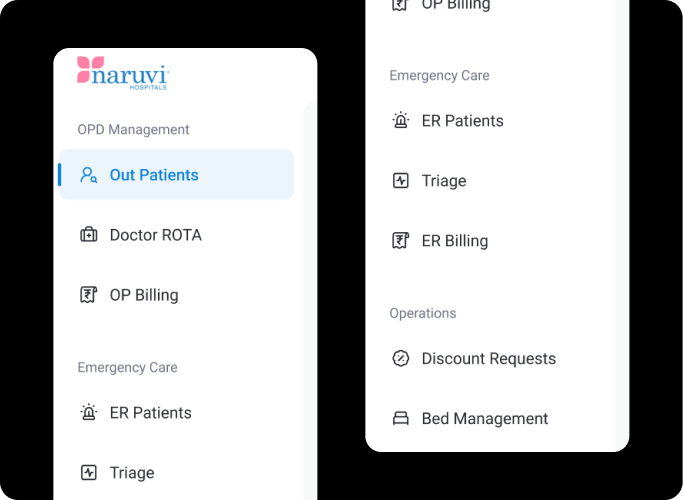
We shifted from a monolithic system to structurally independent modules, enabling hospitals to toggle features like OPD and Emergency on or off to suit their specific needs.
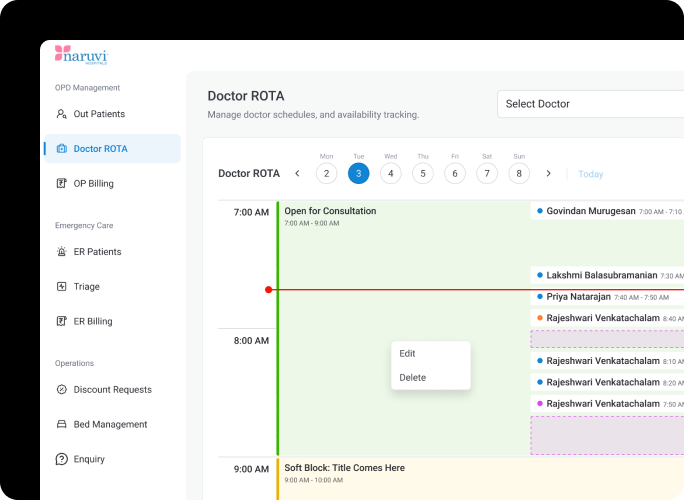
We tailored workflows, information hierarchies and task sets to align with the unique priorities and operational needs of the triage, billing, and nursing teams.
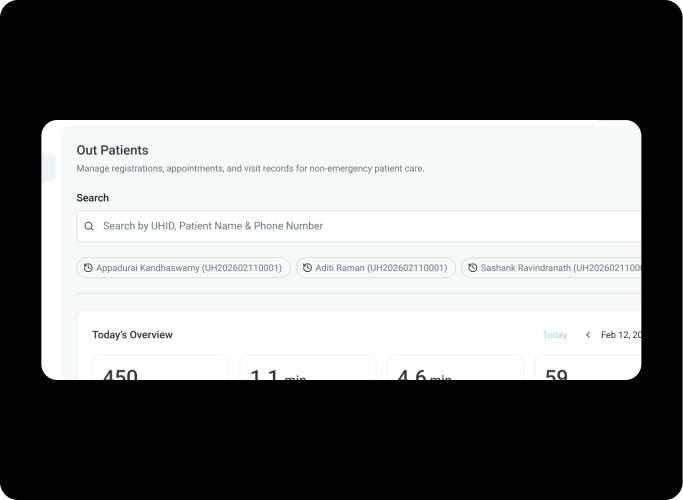
To combat staff overload, we implemented a "show-on-demand" interface that hides clutter by default, surfacing critical data only when a specific search or task is initiated.
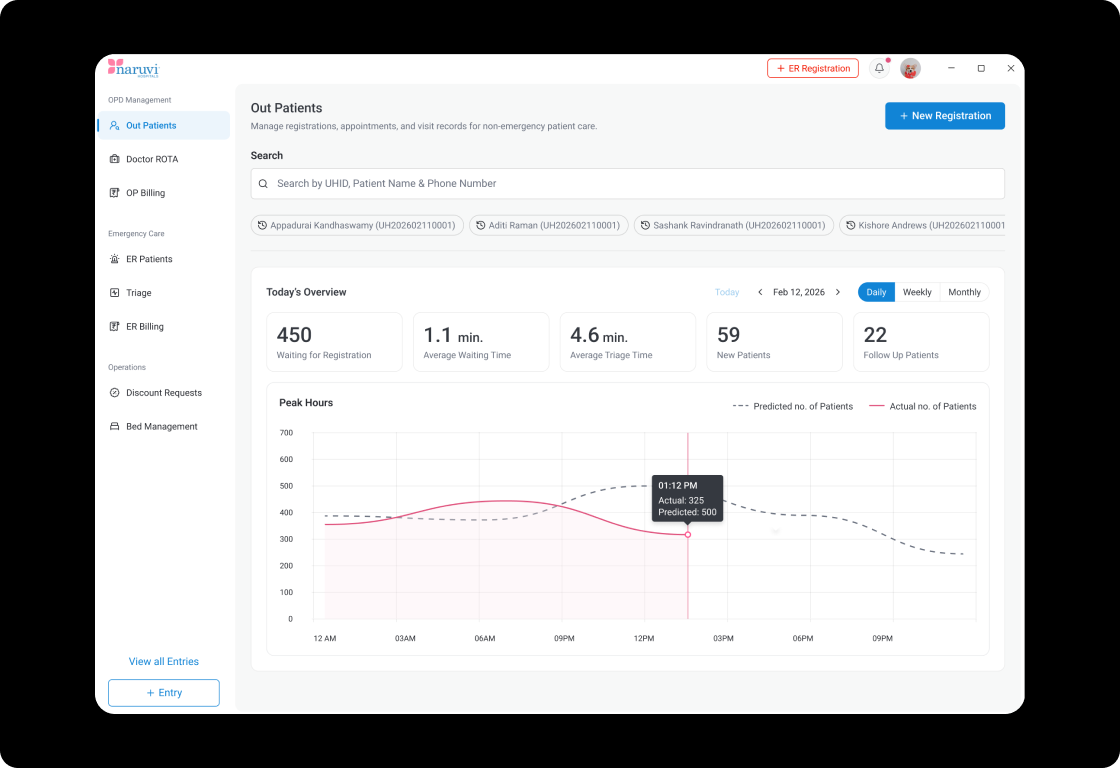
Designed around two primary tasks — patient search and new registration. A search-first approach keeps the interface focused, while key operational metrics provide quick workload visibility without clutter.
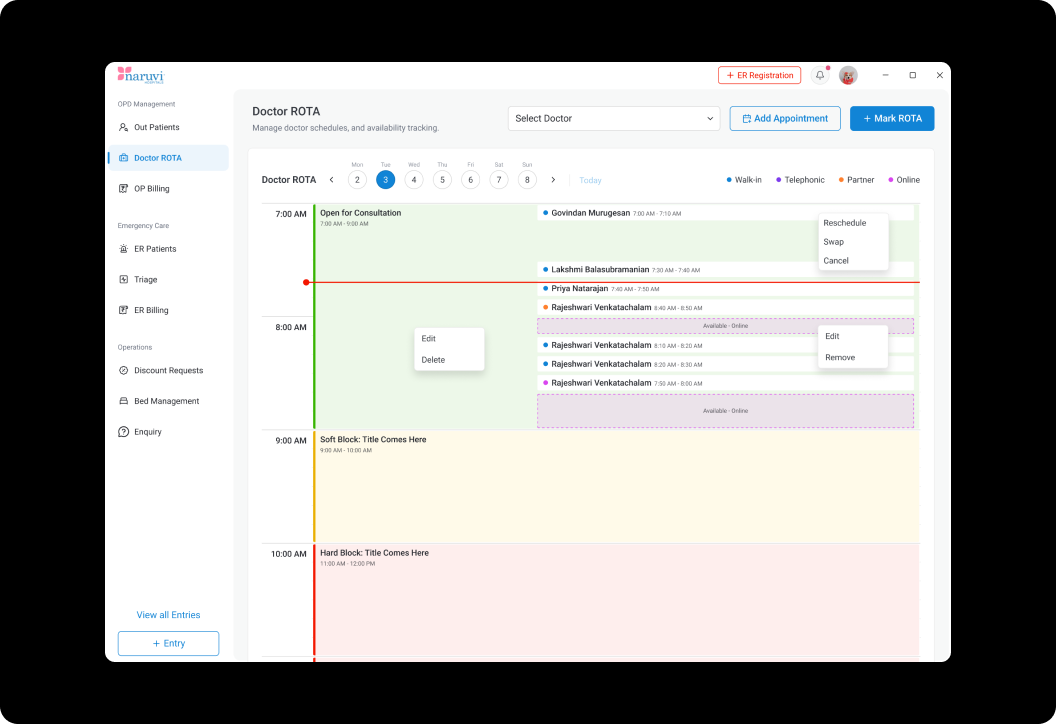
Scheduling shifted from a calendar-centric design to a task-centric one. User research revealed that front desk staff primarily work with the current day, leading to a daily-first scheduling experience. Frequently performed actions were surfaced instead of being hidden inside calendar interactions.
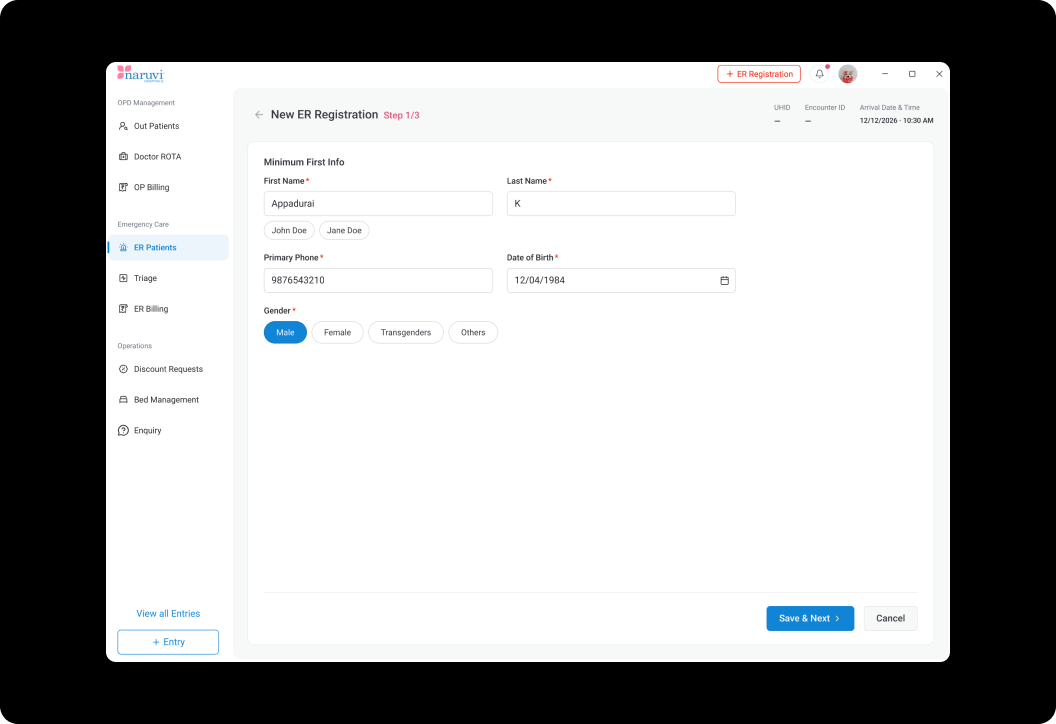
The registration experience was designed around the principle of care-before-documentation. Information was prioritized according to clinical urgency, ensuring only essential details were required before treatment could begin, while less critical information could be completed later.
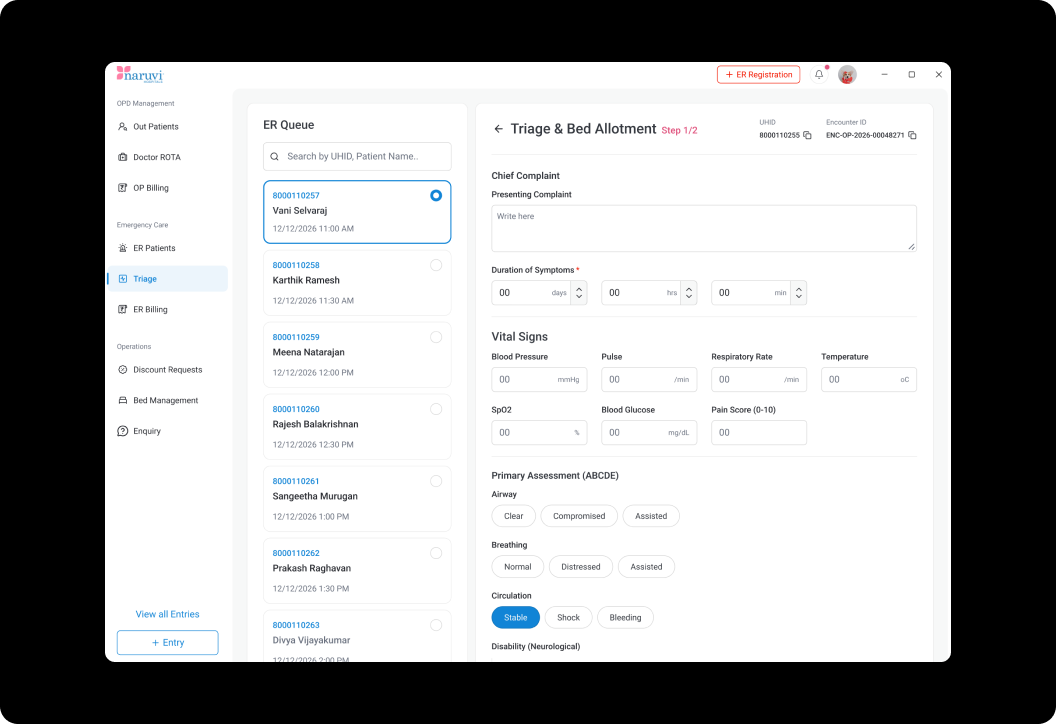
The triage workflow combined clinical decision support with streamlined interactions. Automation handled Glasgow Coma Scale calculations and intelligent bed recommendations, while the interface simplified decision-making by replacing multiple navigation patterns with a unified search-driven experience.
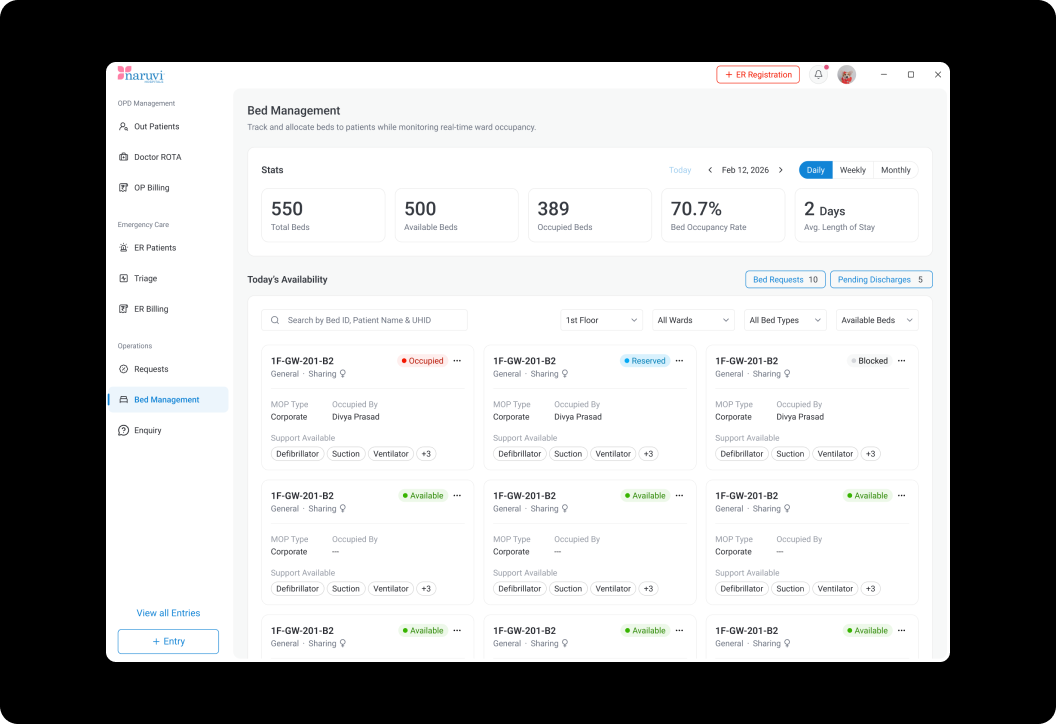
The module evolved from a simple tabular view into a context-aware operational workspace. Visual codes increased information density while remaining readable, and available workflows changed dynamically based on bed status. Additional workflows supported simultaneous request handling and discharge planning.
Collaborating closely with a Senior UX & Designer taught me how to divide ownership effectively, communicate design rationale with confidence, and use feedback to strengthen solutions rather than defend them.
This was my first healthcare project, and spending time inside Naruvi Hospital from the front desk to ward and departments gave a firsthand understanding of hospital operations. Observing front desk staff handle hundreds of patients under constant pressure helped ground the design workflows in real-world behaviour instead of assumptions.
Designing the Front Desk module strengthened my ability to think beyond happy paths by accounting for operational edge cases. It also expanded my UI experience and reshaped how I approach information architecture for complex enterprise products serving multiple roles with different priorities.
A merchant platform built to scale — inventory tracking, instant payouts, and dispute resolution that stay simple as the business grows.
Read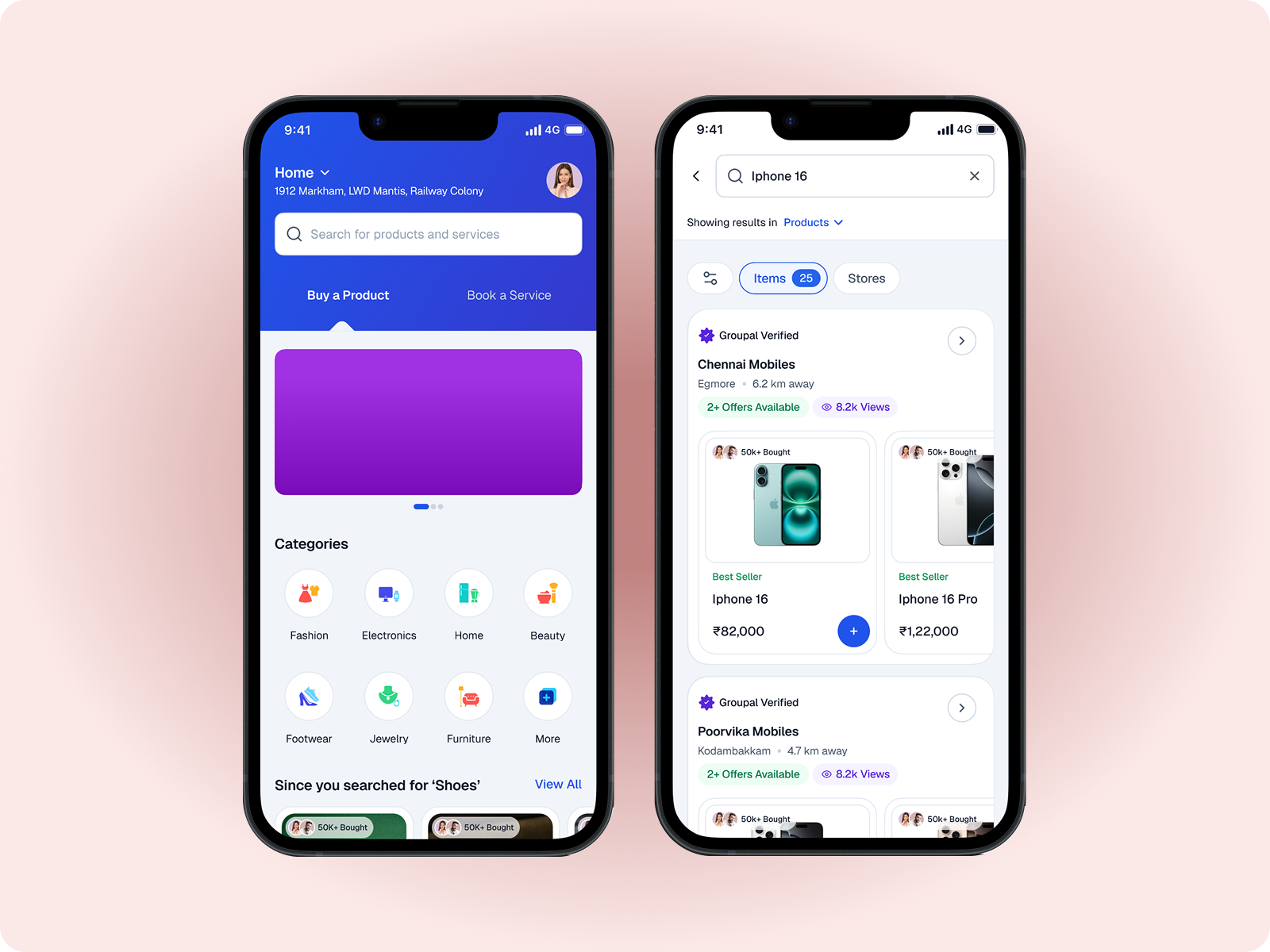
A unified super app that brings products and services together, so people can discover, compare, and book everything without switching apps.
Read