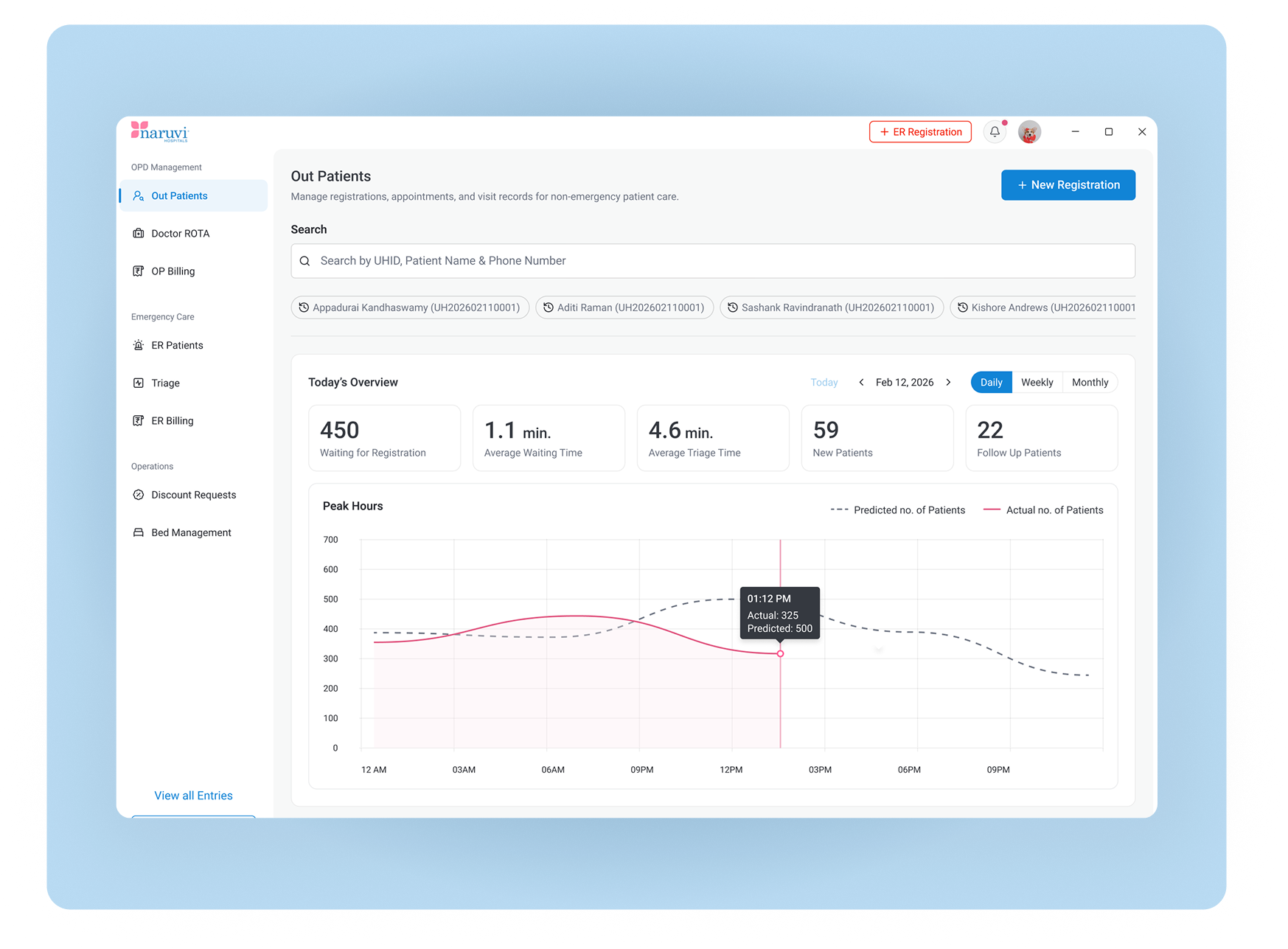
How Fragmented Front Desk Interfaces Cripple The Patient Experience
An end-to-end front desk system that cuts patient check-in friction, eases wait-time anxiety, and keeps clinical workflows moving for hospital staff.
ReadMerchants manage orders, inventory, customers, teams, transactions and growth activities across multiple workflows.
As merchants add products, services and employees, keeping everyday operations organised becomes increasingly difficult.
Grouppal needed a unified experience that could bring these connected activities together without overwhelming merchants.
I'm an Associate Senior UX Designer.
I contributed to the end-to-end design of Grouppal's Merchant Portal, from understanding the merchant ecosystem and defining information architecture to designing workflows, interactions and reusable UI patterns.
We mapped the merchant ecosystem and key workflows to understand how products, services, orders, customers, teams, and transactions connect, uncovering opportunities to simplify everyday operations.
By looking across these workflows as one connected system, we identified common patterns and made everyday merchant operations more efficient.
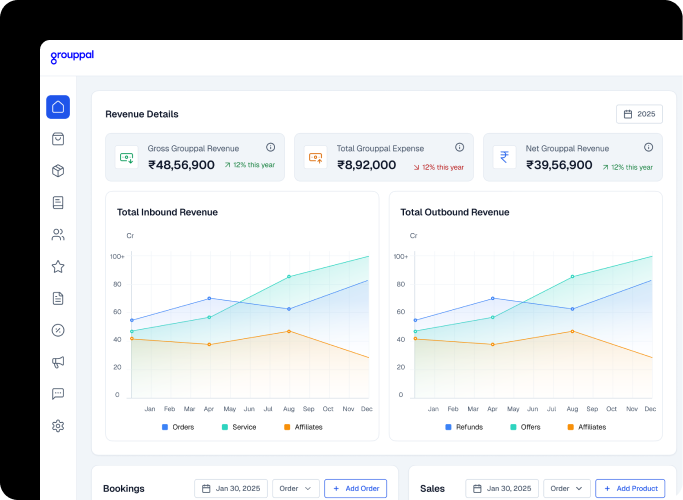
Managing a product can lead to an order, a transaction, a customer interaction and eventually a business decision. These workflows need to work together rather than exist as isolated experiences.
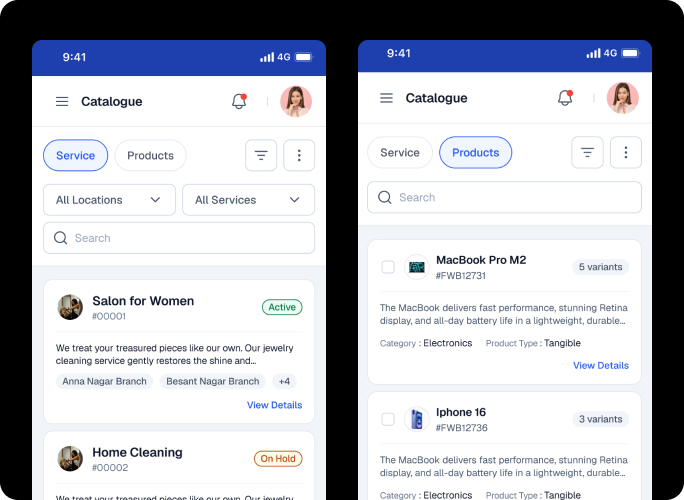
Grouppal supports merchants dealing with products, services or both. The experience needed enough flexibility to accommodate different business models without creating separate systems.
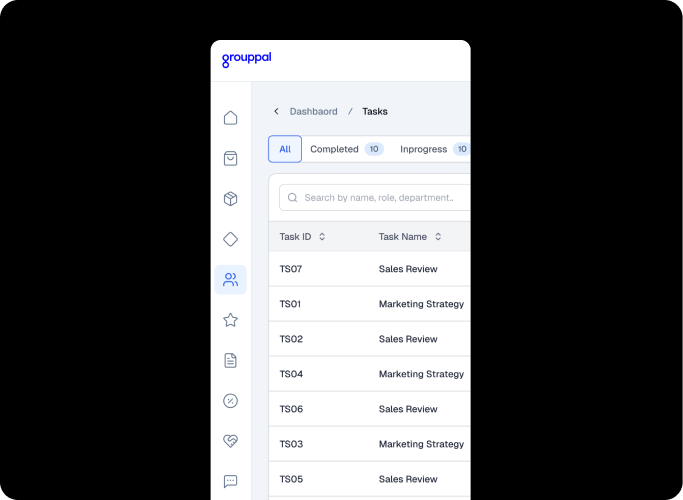
As the platform expands into teams, campaigns, offers and other business functions, the underlying experience needs to remain predictable and easy to navigate.
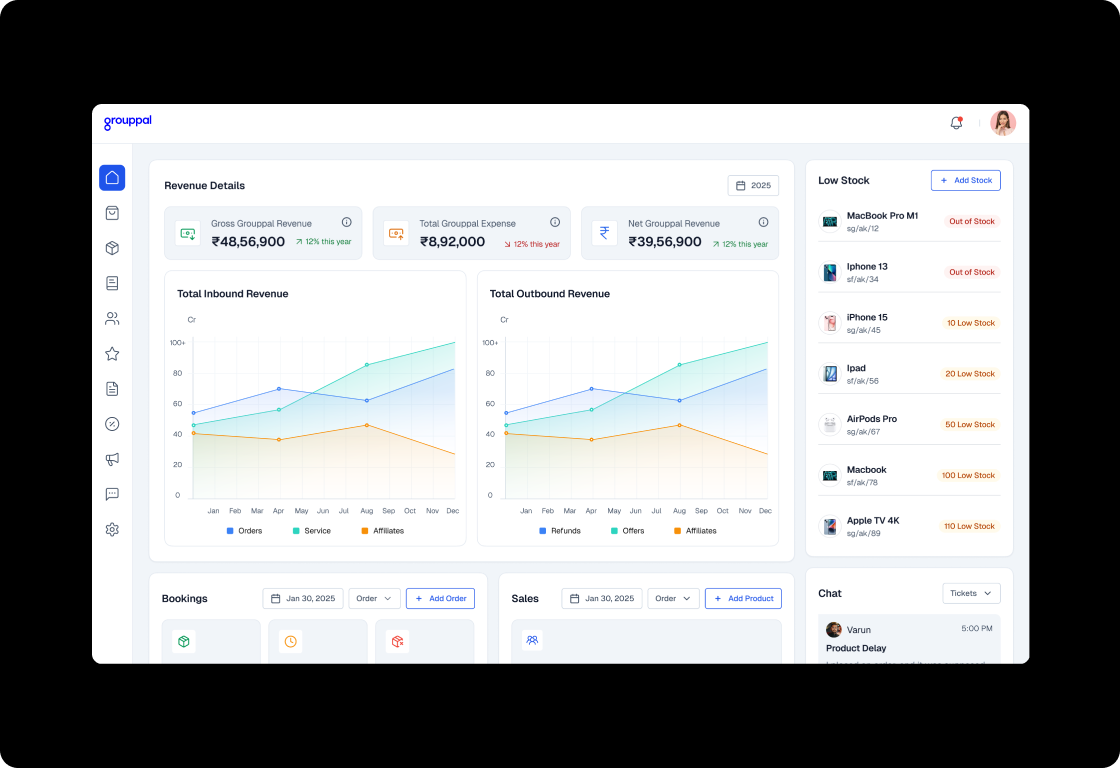
Designed the dashboard as a central hub for business performance, operations and key actions, prioritizing the information merchants need to understand their business at a glance.
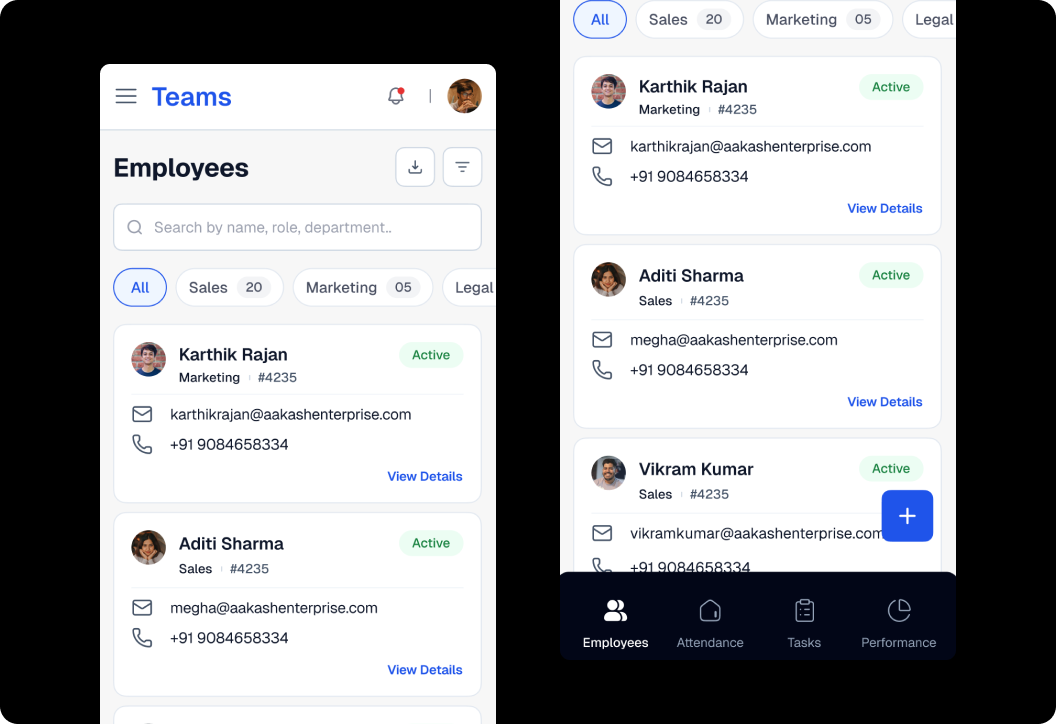
Brought employee-related activities into a single workspace covering employees, attendance, leaves and tasks. Rather than treating each activity as a separate function, the experience connects the different aspects of managing a merchant's team.
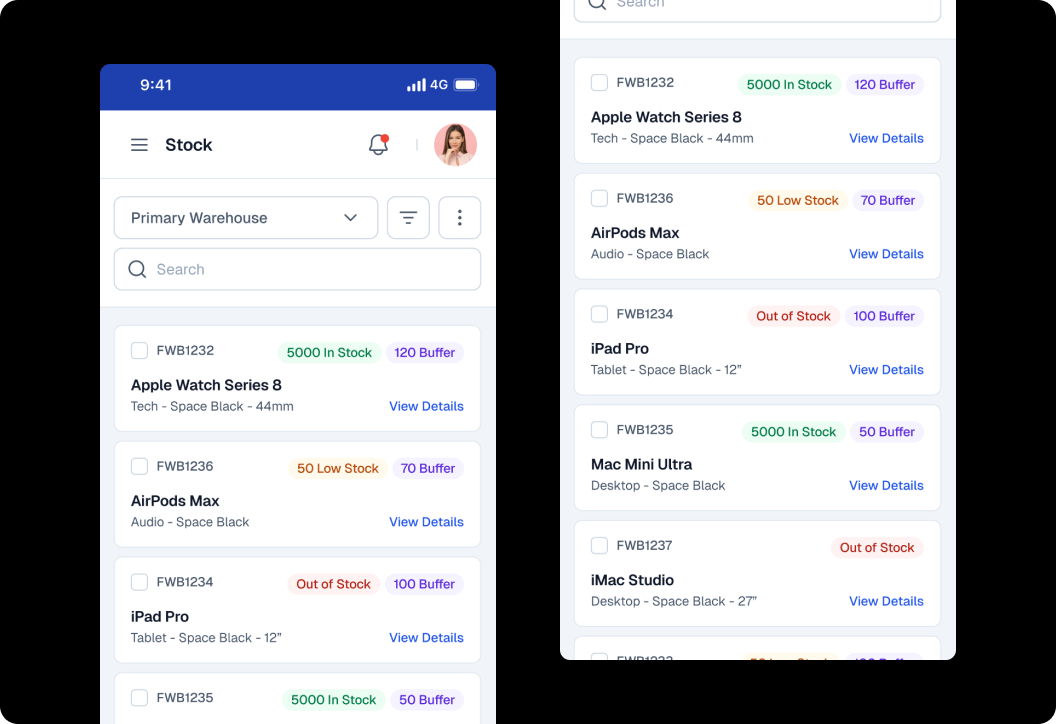
Created a structured inventory experience that brings product information, stock visibility and inventory actions into a single workspace, making it easier to scan while keeping key management actions accessible.
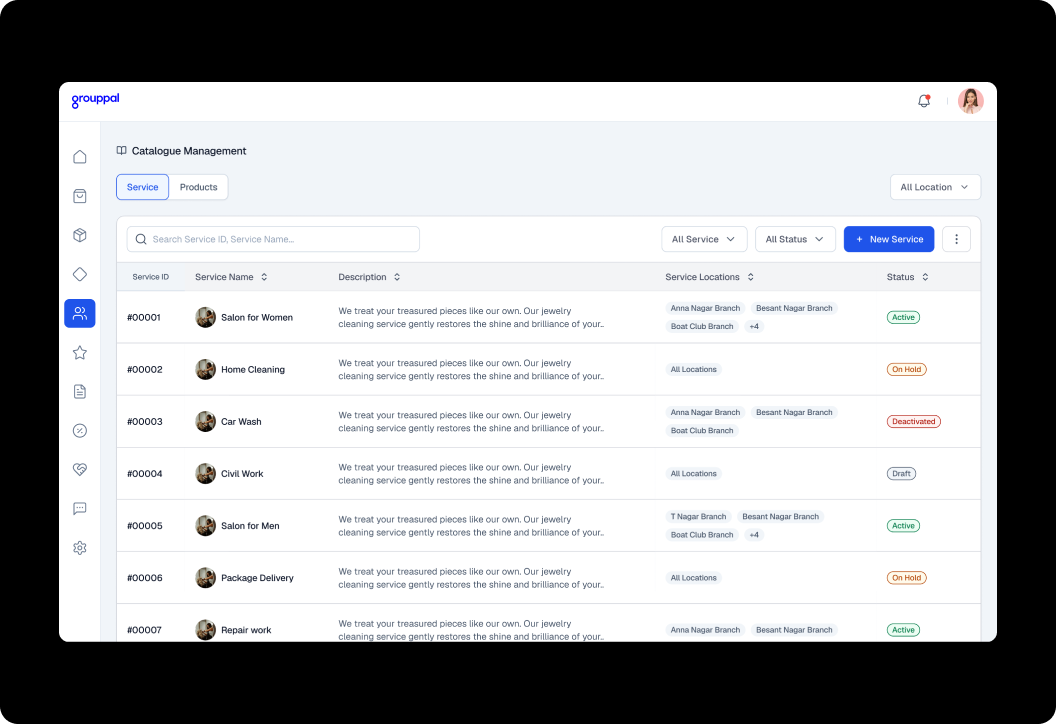
Designed the platform to accommodate merchants who operate through different business models — whether they sell products, offer services, or both. Product and service management follow familiar patterns while adapting to the needs of each offering.
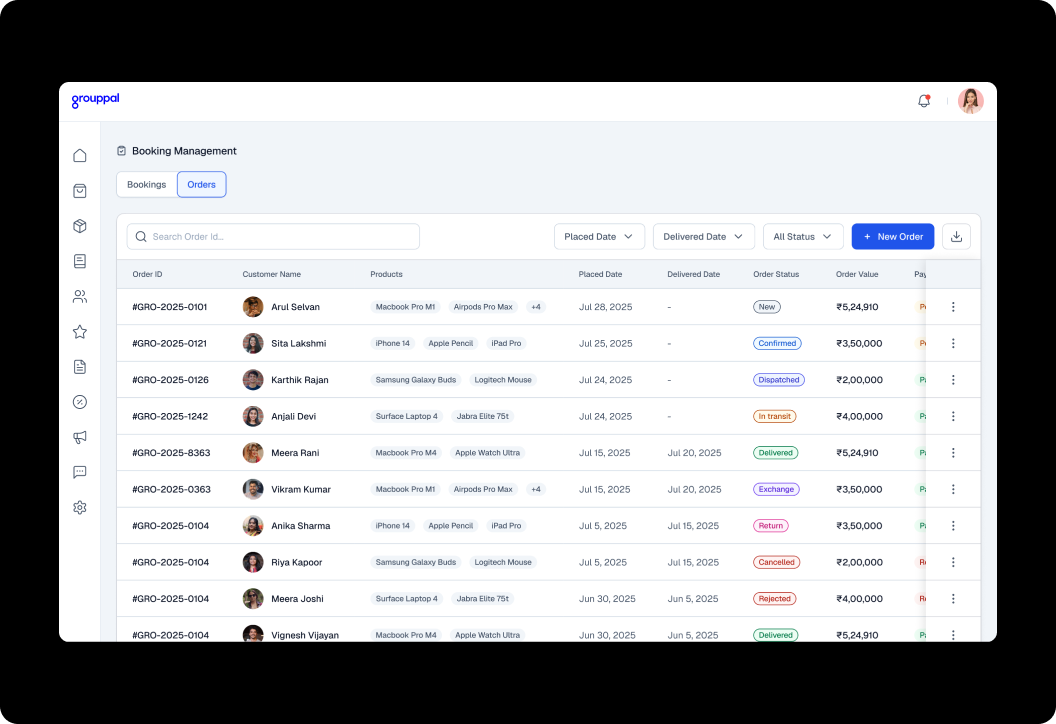
Extended the service management experience into a dedicated booking workflow, allowing merchants to move from managing a service to managing the appointments associated with it. Key booking information and actions are organised around the merchant's operational needs.
Working with product and engineering taught me how to balance business requirements with technical constraints, while clearly communicating the reasoning behind UX decisions and iterating based on feedback.
Designing for merchants showed me how products, services, orders, inventory, customers, teams and transactions are deeply interconnected. Understanding these relationships helped me design workflows around how merchants actually run their business.
Working across multiple modules strengthened my ability to design scalable UX patterns rather than isolated screens. Establishing consistent navigation, tables, forms and interaction patterns helped create a cohesive experience across the entire merchant portal.
An end-to-end front desk system that cuts patient check-in friction, eases wait-time anxiety, and keeps clinical workflows moving for hospital staff.
Read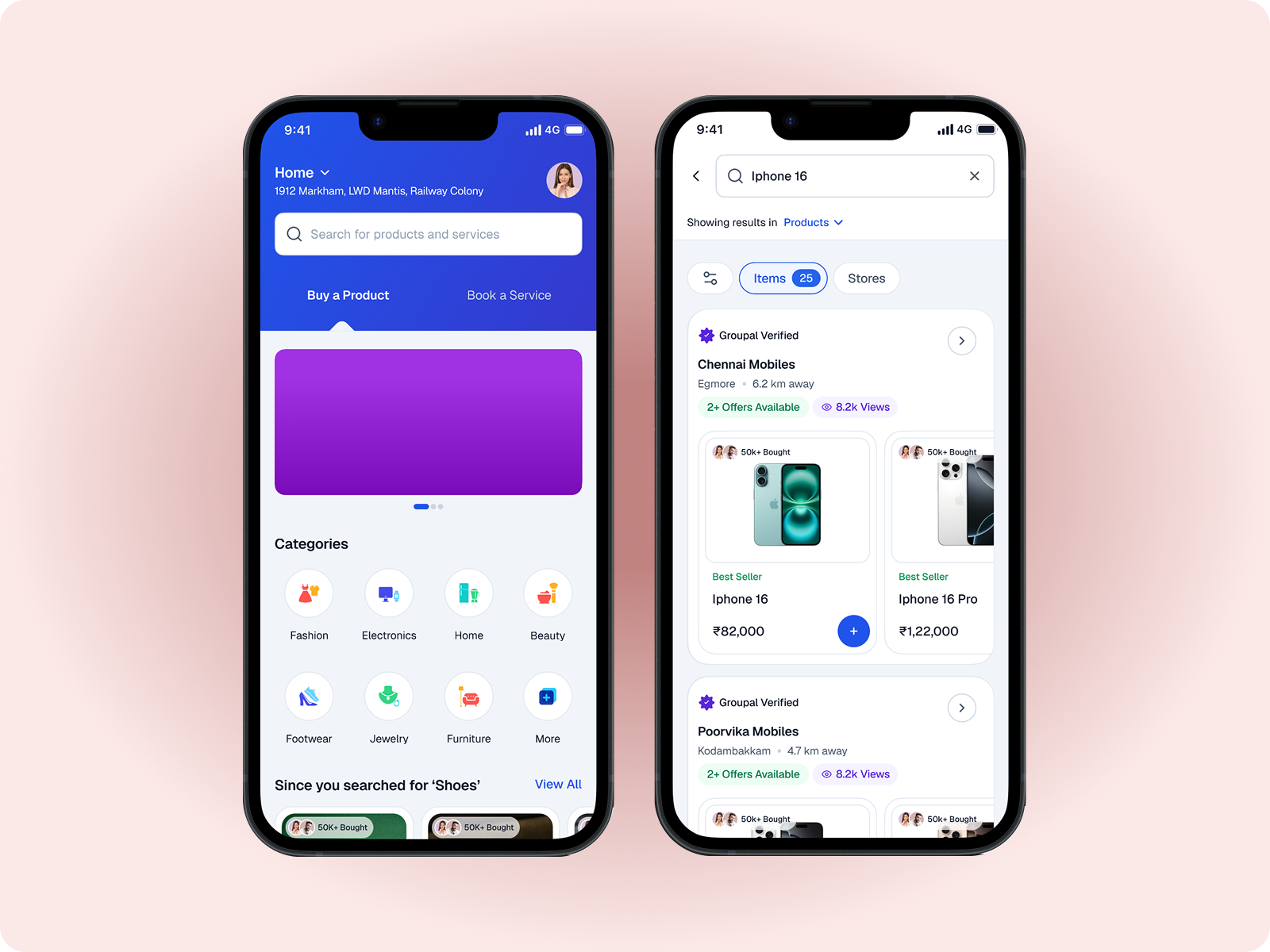
A unified super app that brings products and services together, so people can discover, compare, and book everything without switching apps.
Read